
Private sale car financing is a car loan on a vehicle bought from a person instead of a dealer: the lender runs a lien search on the VIN, pays the seller directly, and you repay in monthly instalments at example rates of 7% to 29.99% APR. On a $15,000 car over 60 months, that is $304 to $397 a month.
See Your Likely Rate First: Soft Check Only →
How Does Private Sale Car Financing Work?
Private sale car financing puts a lender between you and the person selling the car: the lender prices the vehicle from the VIN and odometer, runs the lien search, pays the seller directly at closing, and you repay in monthly instalments at example rates of 7% to 29.99% APR.
The loan is secured by the vehicle, the same structure as a dealer purchase through our used car loans network. What changes is the paperwork: you and the seller produce the bill of sale, the lien search and the registration yourselves, and this guide walks through each piece.
Why Do Banks Treat a Private Sale Differently?
Most big-bank auto loans are built for dealer sales, where the dealer submits the paperwork, so a private buyer is often steered to an unsecured loan at a higher rate: on $15,000 over 60 months that is $341 a month at an example 12.99% against $304 at 7.99% secured.
The bank route still exists, but the branch may ask for the bill of sale, proof of insurance and a lien search before releasing a draft, and some decline older or high-kilometre vehicles outright. An unsecured personal loan skips the lien on the car, which is why its rate runs higher for the same borrower.
Lenders that specialize in private sales close that gap: they verify the vehicle and the seller, handle the payout, and keep the loan secured. Our guide to auto loan rates in Canada shows the example bands by credit tier.

Which 4 Routes Finance a Car Bought From a Person?
There are 4 routes to private sale car financing in Canada: a bank auto loan where the bank allows it, a credit union loan, an unsecured loan, and a private-sale auto lender; at $15,000 over 60 months the example payments run from $304 to $397 a month.
| Route | Example APR | Payment, $15,000 x 60 months | Total interest |
|---|---|---|---|
| Bank auto loan, secured (where the bank allows a private seller) | 7.99% | $304 | $3,244 |
| Credit union loan, secured, member pricing | 8.99% | $311 | $3,678 |
| Unsecured personal loan, no lien on the car | 12.99% | $341 | $5,473 |
| Private-sale auto lender, secured, all credit considered | 19.99% | $397 | $8,839 |
Every APR in the table is an example, not a quote: your offer shows the exact rate before you sign, and no lender may charge more than the 35% criminal rate in section 347 of the Criminal Code. Credit union auto loans suit members with steady history; the private-sale lenders in our network consider all credit and keep the loan secured.
What Does a $15,000 Private Sale Car Cost to Finance?
A $15,000 private sale car costs $341 a month at an example 12.99% APR over 60 months, $5,473 of it interest; stretch the same loan to 72 months and the payment drops to $301 while the interest climbs to $6,674.
| Term at an example 12.99% APR | Payment on $15,000 | Total interest |
|---|---|---|
| 48 months | $402 | $4,312 |
| 60 months | $341 | $5,473 |
| 72 months | $301 | $6,674 |
The term moves the total more than most buyers expect. The Financial Consumer Agency of Canada runs the same comparison at 5% on a $25,000 car: $1,974 of interest over 36 months against $4,681 over 84, a $2,707 difference, and it counts any term of 72 months or more as a long-term loan. Run your own numbers on the car loan calculator, and see how car loan interest works for the month-by-month split.
Get Pre-Approved for a Private Sale: Soft Check Only →
How Do You Check a Used Car for a Lien?
Search the province’s personal property registry before any money moves: in Ontario the seller’s $20 Used Vehicle Information Package includes the lien information, Alberta sells a lien search from any registry agent by VIN, and Quebec uses the RDPRM, its registry of movable property.
A lien means the seller still owes money on the car, and the debt follows the vehicle, not the person. A financed purchase handles it cleanly: the lender pays the seller’s balance first and the rest to the seller, the same structure described in our guide to selling a financed car. A seller who cannot explain the lien, or presses for cash before the search comes back, is your signal to walk.
What Paperwork Does a Private Sale Need?
A private sale needs 3 documents: a bill of sale signed by both parties, the signed ownership or transfer portion of the seller’s registration, and the lien search; Ontario adds the seller’s $20 UVIP on top.
The bill of sale carries the buyer, the seller, the vehicle with its VIN and odometer reading, the price and the date. Our bill of sale Ontario guide has a copy-ready template and the registration steps that follow; Alberta’s private seller page publishes its own standard form. The table shows where the lien check and the tax land by province.
| Province | Lien check | Tax when you register |
|---|---|---|
| Ontario | Seller’s UVIP, $20, includes lien information | 13% RST on the greater of the price or the wholesale value, at ServiceOntario, within 6 days |
| British Columbia | Personal Property Registry search | 12% PST on a passenger vehicle under $125,000, collected by the Autoplan broker |
| Alberta | Lien search from a registry agent, by VIN | No provincial sales tax on a private sale |
| Quebec | RDPRM search | QST at the SAAQ, on the higher of the price or the estimated value for vehicles 14 years old or less |
| Everywhere else | The province’s PPSA personal property registry | The province’s tax on private sales, paid at the registry |
How Much Tax Do You Pay on a Private Sale?
You pay no tax to the seller; the province collects it when you register, and on a $15,000 car that is $1,950 in Ontario (13% RST), $1,800 in BC (12% PST), about $1,496 in Quebec (9.975% QST) and $0 in Alberta, which has no provincial sales tax.
Ontario charges the 13% on the greater of your price or the Canadian Red Book wholesale value, and the province requires registration within 6 days of the purchase. Quebec applies the same higher-of rule against an estimated value for vehicles 14 years old or less, collected by the SAAQ. The full Ontario math, including the appraisal route for rough vehicles, is in our used car tax Ontario guide.
Budget the tax as cash: on a private sale the lender finances the car’s price, and the registry wants its money when you transfer the plates. A family transfer can be different again; the gift a car in Ontario guide covers the tax-free route.
How Does the Purchase Close, Step by Step?
A financed private sale closes in 5 steps, and the first one takes about 3 minutes online.
- Get pre-approved first. About 3 minutes online with a soft check; income is confirmed through a read-only IBV bank check in about 60 seconds. You learn your likely amount and rate before you answer a single listing. Start with car loan pre-approval.
- Record the vehicle. Year, make, model, trim, odometer reading and VIN. Lenders price the car from these.
- Submit it for approval. The lender checks age, kilometres and value against the price and runs the lien search on the VIN.
- Sign and fund. You review the rate, term and total cost, e-sign, and the lender pays the seller directly. You never carry the cash.
- Register and drive. Bill of sale in hand, pay the provincial tax at the registry, transfer the plates, arrange insurance. The first payment follows about a month later.
What Are the Risks of Buying From a Person?
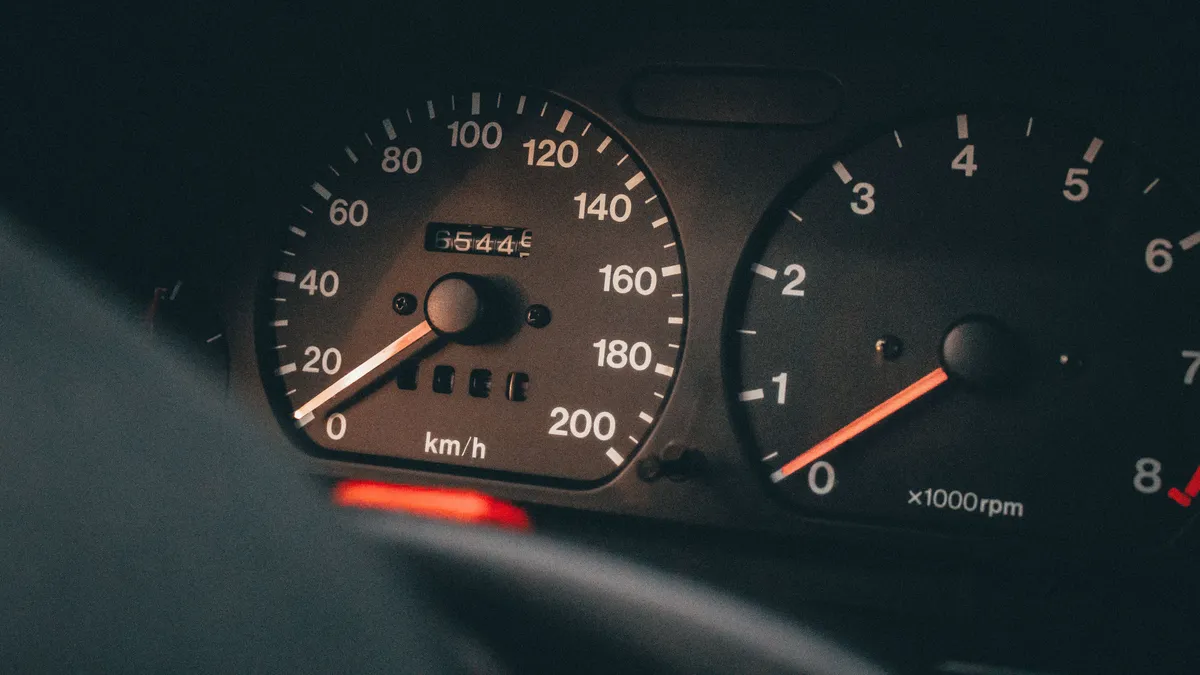
3 risks sit in every private sale: a lien you did not find, a car sold as-is with no dealer obligations behind it, and an odometer that does not match the service records.
The lien search solves the first. The second is priced in: a private car has no dealer warranty, so have a mechanic inspect it before you commit, and expect the price to reflect what the inspection finds. For the third, compare the odometer against the UVIP or the service history; a reading that jumps backwards anywhere in the record ends the deal.
Price matters as much as condition. The Financial Consumer Agency of Canada notes a new car can be worth 25% less after 1 year and lose 15% to 25% of its value in each of the next 4 years, so check recent sold listings for the same year and trim before you treat the asking price as the market. Overpay and the loan starts under water; our vehicle repossession guide shows what that costs when it goes wrong.
What Do You Need to Qualify?
Lenders in the network look for about $1,800 a month before tax in steady employment income, full-time or part-time, 3 or more months with the current employer, and a vehicle priced close to its market value; all credit is considered, and approval is decided by each lender and is never certain.
Credit matters less than most buyers fear on a secured file: the credit score needed for a car loan guide explains why income carries the decision, and the bad credit car loans page covers what the rebuilding tier can expect. Buyers with no Canadian history yet can start with the no credit history or newcomer car loans guides, and a co-signer strengthens a file that sits on the line.
Frequently Asked Questions
Can you finance a car bought from a private seller in Canada?
Yes. Lenders that handle private sales price the vehicle from the VIN, run the lien search, and pay the seller directly at closing, at example rates of 7% to 29.99% APR. The income test is the same as any used car loan.
Do banks finance private car sales?
Some do, with extra paperwork; many steer the purchase to an unsecured loan or decline older vehicles. On $15,000 over 60 months the route changes the example payment from $304 secured to $341 unsecured, which is why credit unions and private-sale lenders carry much of this market.
How does the seller get paid?
The lender sends the payout once the paperwork clears: to the seller when the car is owned outright, or to the seller’s lender first when a lien shows, with the balance to the seller. You never hand over the cash yourself.
What income do you need for private sale car financing?
About $1,800 a month before tax in steady employment income is the common floor, full-time or part-time, with 3 or more months at the current employer. Approval is decided by each lender and is never certain.
Do you pay sales tax on a private car sale?
Not to the seller. You pay the province when you register: on a $15,000 car that is $1,950 in Ontario, $1,800 in BC, about $1,496 in Quebec and $0 in Alberta. Ontario and Quebec both charge on the higher of the price or a book value.
How do you check for a lien before you buy?
Ontario: the seller’s $20 UVIP lists lien information. Alberta: a registry agent search by VIN. Quebec: the RDPRM. Other provinces: the PPSA personal property registry. If a lien shows, the lender’s payout discharges it at closing, or you walk away.
Can the tax be rolled into the loan?
Usually not on a private sale. The lender finances the price of the car and the registry collects the tax when you transfer the ownership, so plan for $0 to $1,950 in cash on a $15,000 car depending on the province.
How long does the whole process take?
Pre-approval takes about 3 minutes with a soft check. The vehicle review, the lien search and the payout usually follow within a few business days once the lender has the VIN and the seller’s details, and the first payment lands about a month after funding.
Finance a Car From a Private Seller: Start Here →
About Our Editorial Team
Sources: Ontario.ca: Buying or selling a used vehicle · Ontario.ca: Used Vehicle Information Package · Alberta.ca: Buying a vehicle from a private seller · FCAC: Financial risks when buying a car · SAAQ: QST on used vehicle sales · CRA: GST/HST and PST rates by province · Criminal Code, s.347.
Disclaimer: General information, not legal or tax advice; confirm current rules with your provincial registry. FindAVehicle is an auto loan-matching service, not a lender; approval is decided by each lender and is never certain. Auto loan rates typically range from about 7% to 29.99% APR depending on your credit and the vehicle; every rate on this page is an example, not a quote.