
The short answer
Used car loans Canada-wide are vehicle loans secured on a car that has had at least one owner, approved on your income and priced by credit band from about 7% to 29.99% APR. This page prices one $18,000 used car at every band and term, sets out the age and kilometre limits lenders apply, and walks the private-sale route from lien search to registration.
This is the same application as our pre-approval page: you describe yourself, your income and roughly what you want to spend, then connect your bank for a read-only income check. Getting matched uses a soft check that does not change your score, and nothing is final until you choose a vehicle, dealer or private, and sign. The sections below price the loan at every band and show what the vehicle itself has to pass.
Used car loans are how most Canadians actually buy their vehicles. A dependable three-to-five-year-old car does the same job as a new one for a fraction of the price, the first owner has already paid the steepest depreciation, and insurance on a lower-value vehicle usually costs less. The loan works the same way as new-car financing; what changes is what the money buys, the limits the lender puts on the vehicle, and the checks worth doing before you sign.

Used car loans Canada-wide cover a car, truck, SUV or van that has had at least one previous owner, bought from a licensed dealer or a private seller, and they run on a fixed payment over a fixed term with the full cost of borrowing disclosed in writing before you sign. Lenders in the FindAVehicle network fund amounts from a few thousand dollars up to the price of a late-model SUV, and the loan is secured on the vehicle, which is why the vehicle has to pass the lender’s own checks as well as yours.
Three things decide the offer: your income and job tenure, the credit band your file lands in, and the vehicle’s age, kilometres and value against the price. The first two set the rate; the third sets the longest term the lender will write and whether a down payment is required. The car loan pre-approval page explains how to lock the first two before you shop so the third is the only open question on the lot.
On the same $18,000 financed over 60 months, the lowest band pays $365 a month and $3,893 in interest while the highest band pays $582 a month and $16,935 in interest. The table runs one used vehicle through the four bands lenders commonly price, at one illustrative APR per band inside FindAVehicle’s 7% to 29.99% range. The financed amount is after tax and any down payment.
| Credit band (Equifax 300 to 900) | Typical APR band | Shown at | Payment, 60 months | Total interest | Total paid |
|---|---|---|---|---|---|
| 660 and up | 7% to 12% | 7.99% | $365 | $3,893 | $21,893 |
| 600 to 659 | 12% to 18% | 12.99% | $409 | $6,568 | $24,568 |
| 540 to 599 | 18% to 25% | 19.99% | $477 | $10,607 | $28,607 |
| Below 540, or a recent proposal or bankruptcy | 25% to 29.99% | 29.99% | $582 | $16,935 | $34,935 |
Used-vehicle rates typically sit a point or two above a manufacturer’s promotional new-car rate because the collateral is older, and no manufacturer subsidizes the rate on a used lot. The band is still the whole story: the gap between the top and bottom rows is $217 a month and $13,042 in interest on the same car. Our bad credit car loans page runs the same four bands on a $22,000 car and shows what income clears each payment.

On $18,000 at 12.99%, stretching the term from 48 to 84 months cuts the payment by $156 a month and adds $4,323 of interest, and on a used vehicle the longer term also runs into the lender’s age rule, because the loan is not allowed to outlive the car.
| Term on $18,000 at 12.99% | Payment | Total interest | Total paid | What it means on a used vehicle |
|---|---|---|---|---|
| 48 months | $483 | $5,175 | $23,175 | Open on almost any vehicle a lender will finance |
| 60 months | $409 | $6,568 | $24,568 | The common term on a 3 to 6 year old vehicle |
| 72 months | $361 | $8,009 | $26,009 | Usually limited to vehicles under about 5 years old |
| 84 months | $327 | $9,498 | $27,498 | Rarely written on a used vehicle; you owe more than it is worth for most of the loan |
The honest rule: pick the shortest term whose payment fits inside 15% to 20% of your gross monthly income, then put any down payment toward the price rather than toward stretching the term. Our car loan calculator lets you test your own numbers, and the guide to how car loan interest works shows the amortization behind each row.
The same $623 a month that finances a $40,000 new vehicle over 84 months at 7.99% finances an $18,000 used vehicle over 60 months at the same rate for $365, with $8,460 less interest and two fewer years of payments. That is the arithmetic behind the used-car choice, and it holds even for a buyer whose band costs more.
| The purchase | Financed | Rate and term | Payment | Total interest | Paid off |
|---|---|---|---|---|---|
| New vehicle | $40,000 | 7.99% over 84 months | $623 | $12,353 | Year 7 |
| New vehicle, shorter term | $40,000 | 7.99% over 60 months | $811 | $8,652 | Year 5 |
| Used vehicle, prime band | $18,000 | 7.99% over 60 months | $365 | $3,893 | Year 5 |
| Used vehicle, rebuilding band | $18,000 | 19.99% over 60 months | $477 | $10,607 | Year 5 |
Read the last two rows together. A rebuilding borrower at 19.99% on an $18,000 used car still pays $146 a month less than a prime borrower on the new one, and finishes two years sooner. Certified pre-owned stock splits the difference, dealer-inspected and often with warranty left, at used prices. Used electric vehicles are the sharpest version of the same point: early EV depreciation is steep, and our electric car lease guide compares leasing new against financing used.
Most lenders finance vehicles up to about 10 model years old and under roughly 160,000 to 200,000 km, and they cap the term so that the loan ends before the vehicle is expected to; an older or higher-kilometre vehicle can still be financed, usually with a shorter term or a larger down payment. The limits are the lender’s, not the law’s, so they vary, and the figures below are the typical shape rather than any one lender’s rule.
| Vehicle at signing | Typical longest term | What the lender usually asks for |
|---|---|---|
| Under 3 years old, under 60,000 km | 72 to 84 months | Nothing beyond the standard file |
| 3 to 6 years old, under 120,000 km | 60 to 72 months | The common used-car loan; often no down payment |
| 7 to 10 years old, under 160,000 km | 36 to 60 months | A down payment or a price in line with book value |
| Over 10 years old or over 200,000 km | Case by case, often 24 to 36 months | A larger down payment, or the lender declines the vehicle and approves a different one |
The odometer reading on the bill of sale is part of the lender’s file, so note it when you inspect the vehicle and make sure it matches the listing. In Ontario a dealer must disclose in writing an odometer that is broken, replaced or rolled back, and a private seller’s bill of sale must state the reading as well.
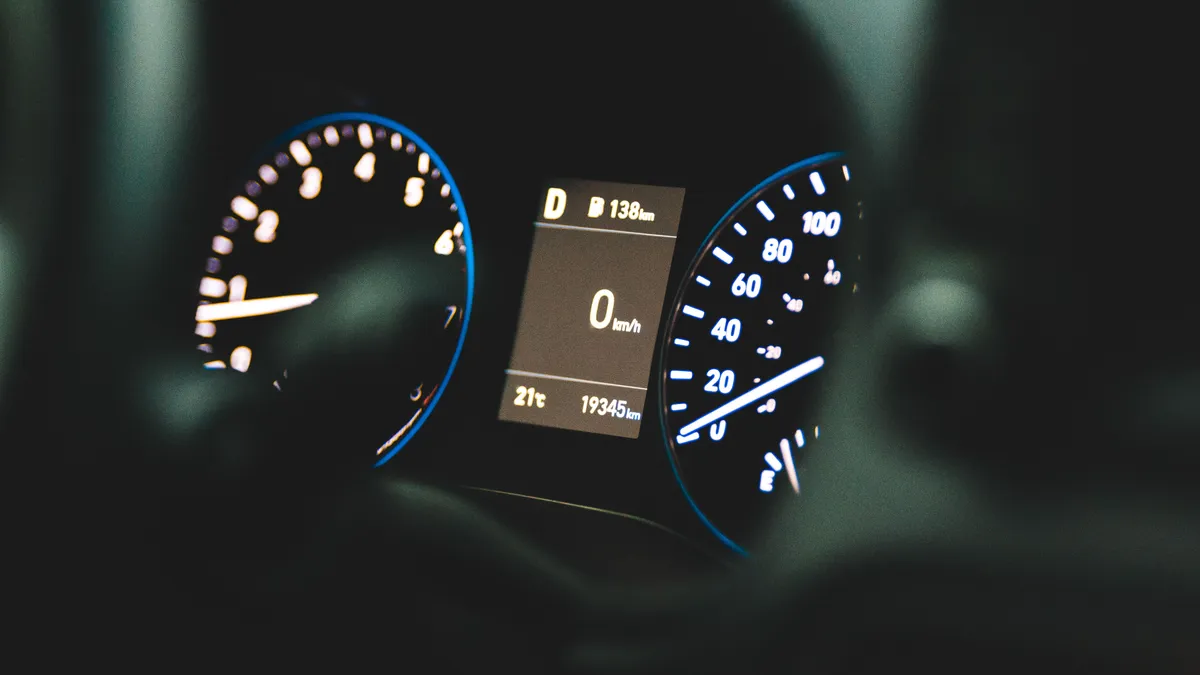
A used vehicle is only a bargain if it runs, so before any used car loan is finalized, spend $150 to $200 on a pre-purchase inspection by an independent mechanic, pull a vehicle history report, and confirm there is no money owing on the vehicle through the provincial lien search. Lenders like these checks for the same reason you should: nobody wants to finance someone else’s problem.

Financing a used car from a licensed dealer is the straightforward route: the dealer’s lenders fund the deal, the vehicle comes with the provincial safety certification and the disclosures the dealer regulator requires, sales tax is collected at the counter, and bad-credit programs are widely available. Financing a private sale takes one extra step, a lender that will pay the seller directly, which the FindAVehicle network arranges.
| Compared on | Dealer purchase | Private sale |
|---|---|---|
| Vehicle price | Usually higher; in Ontario the advertised price must include every dealer fee except HST and licensing | Usually lower; no fees, no warranty unless the manufacturer’s is still running |
| Rate | Same bands; sometimes a promotional rate on certified stock | Same bands; no promotional rates |
| Lien and title check | Handled by the dealer | You and the lender run it before funding |
| Safety certificate | Supplied by the dealer where the province requires it | Seller supplies it where required, or you arrange it before registration |
| Sales tax | Collected at the counter | Paid at registration; in Alberta none on a private sale |
| Paperwork | Dealer prepares the contract and registers the vehicle | Bill of sale, lien search and registration are on you, with the lender’s checklist |
| Selection | That dealer’s inventory | Any private listing in Canada |
Either way, get a pre-approval first so you shop with a real budget, insist on the three checks above, and never pay a deposit before the financing is confirmed in writing. Across used car loans Canada-wide, a private sale wins on price and a dealer wins on paperwork and recourse. Our credit union auto loan comparison shows when a member-owned lender undercuts both routes on a used vehicle.
Private-sale car financing is a used car loan on a vehicle bought from a person rather than a dealership: an approved lender pays the seller directly after a lien search on the VIN, you sign a bill of sale and register the vehicle in your name, and you repay the lender in monthly instalments at the same 7% to 29.99% APR bands used car loans Canada-wide carry. Most banks make private-party loans hard to get, which is why many buyers assume they must pay cash; the lenders in our network are built for them.

What you bring is the same as any used car loan: steady employment income (about $1,800 a month before tax is the floor across the network), a valid licence, proof of address and an active bank account. What the vehicle brings is a clear title, a price in line with market value, and age and kilometres inside the lender’s limits. Our bill of sale guide includes a copy-ready template, and for a vehicle staying in the family the gift a car in Ontario guide covers the tax-free transfer instead.
In Canada a car loan attaches to the vehicle, not the person, so if a private seller still owes money on the car, that lien follows the car to you and the seller’s lender can repossess it even after you have paid in full. A dealer clears liens as a matter of course; on a private sale, the search is yours and the lender’s to run, and it is the single biggest protection financing adds over paying cash.
The search runs against the VIN in the provincial personal property registry. In Ontario the seller is legally required under the Highway Traffic Act to give you the Used Vehicle Information Package, which shows any money owing along with the vehicle’s registration history and includes the bill of sale section; in British Columbia the search is through the BC Personal Property Registry, and every other province has its own. If a lien exists, the lender pays it out of the purchase price before the title transfers, which a cash buyer cannot do.

Tax is paid on the vehicle, not on the loan, and where you pay it depends on the route: a dealer collects it at the counter and it is usually rolled into the financed amount, while on a private sale you pay it at the registry when you register as the new owner, so it has to come from your own pocket or from a loan amount that allows for it.
Ontario is the clearest case because the rules are published: the buyer pays 13% retail sales tax at a ServiceOntario centre when registering, calculated on the purchase price or the vehicle’s wholesale value, whichever is greater, and must register within 6 days of the purchase. A low number on the bill of sale does not lower the tax.
Alberta charges no provincial tax on a private sale and only the 5% GST at a dealer. Most other provinces charge their provincial sales tax or HST at registration on a private sale, often on the higher of the price and the book value, so budget for it before you agree a price. The used car tax Ontario guide walks the 13% math line by line.
Yes, and the two fit together better than most buyers expect: the amounts on a used vehicle are smaller, so the payment clears the 15% to 20% income test on a lower salary, and an instalment loan reported to the bureaus is one of the steadiest ways to add positive history to a damaged file. Used car loans Canada lenders in the network consider every credit type and weigh verified employment income most heavily.
The trade is the band: a file below 600 lands in the 19.99% or 29.99% rows of the cost table, which is why the vehicle price matters more than any rate negotiation. Dropping from $18,000 to $12,000 financed at 29.99% over 60 months takes the payment from $582 to $388. Our bad credit car loans guide covers what lenders read instead of the score, the no credit car loans page covers a thin file, and the car loan after bankruptcy page covers the timeline after a proposal or discharge.

The application takes about 3 minutes online, the income check about a minute, and most buyers have an offer to review within one business day. Funding follows once the vehicle, dealer or private, is confirmed with the lender.
Used car loans are available in every Canadian province and territory, and the online application and lender match work the same nationwide. Pre-approval holds for 30 to 60 days, long enough to shop two or three listings properly.
Call the lender before the due date, not after; many lenders will defer one payment to the end of the term or split it over two months if you ask first, and a deferral agreed in advance is normally not reported as a missed payment.
If the problem is the payment itself, the fixes are in order: refinance to a longer term once twelve on-time payments are behind you, trade down to a cheaper vehicle while the loan is in good standing, or arrange a voluntary surrender, which costs less than a repossession and lets you negotiate the shortfall. Our vehicle repossession in Canada guide covers the notice rules and the deficiency balance province by province, and refinancing your vehicle loan explains when a lower band becomes available. What never helps is silence: a repossession is reported for six years.
Yes. The lender pays the private seller directly after a lien search on the VIN, you sign a bill of sale and register the vehicle, and you repay the loan monthly at the same bands as a dealer purchase. The five steps are on this page.
Most used car loans Canada lenders are comfortable under about 10 years old and roughly 160,000 to 200,000 km. Older vehicles can still be financed with a larger down payment or a shorter term, so the loan does not outlast the vehicle.
Usually a point or two, because the vehicle securing the loan is older and no manufacturer subsidizes the rate. Strong credit still lands near 7% to 9% APR; rebuilding credit runs higher, up to 29.99% APR, always disclosed before you sign.
Over 60 months it is about $365 at 7.99%, $409 at 12.99%, $477 at 19.99% and $582 at 29.99%, with total interest from $3,893 to $16,935. Tax, licensing and any down payment change the financed amount.
Yes. Approval leans on verified employment income of about $1,800 a month before tax, and the application starts with a soft check, so exploring your options does not touch your score. Expect the higher bands until the loan builds new history.
Yes, at the registry when you register the vehicle, not to the seller. In Ontario it is 13% on the higher of the price and the wholesale value, paid at ServiceOntario within 6 days. Alberta charges no provincial tax on a private sale. Most other provinces charge their sales tax at registration.
It confirms the seller does not still owe money on the car. In Canada a loan attaches to the vehicle, so an unpaid lien could follow the car to you. The lender searches the provincial registry against the VIN and pays any lien out of the price before the title transfers.
Proof of income and address, a valid driver’s licence, the vehicle’s VIN, year, make, model and odometer reading, and a written bill of sale signed by both parties. In Ontario the seller must also give you the Used Vehicle Information Package.
Yes. Pre-approval fixes your budget, takes about 3 minutes, and turns the dealership conversation into a price negotiation. It holds for 30 to 60 days.
No. Getting matched uses a soft check that does not affect your score. A hard inquiry only happens later, with your consent, when you proceed with a specific lender.
Used car loans Canada-wide reward the buyer who arranges money before metal: get pre-approved, run the three checks, and finance a vehicle the loan can comfortably outlive.
Sources:Financial Consumer Agency of Canada: Financing a car · Ontario.ca: Buying or selling a used vehicle (tax at registration, the Used Vehicle Information Package and the bill of sale; page updated June 18, 2026, read October 19, 2026) · Criminal Code, s.347. Payment figures are standard amortization on the stated APR and term, rounded to the dollar; checked October 19, 2026.
Disclaimer: FindAVehicle is an auto loan-matching service, not a lender. Approval is never certain and depends on each lender’s assessment of your income, credit and vehicle. Auto loan rates typically range from about 7% to 29.99% APR; your actual rate is set after a full credit assessment. Vehicle age and kilometre limits are set by each lender. All credit is considered, with a soft check to match you and a hard inquiry only with your consent. Full-time or part-time employment income only. Borrow responsibly.