
By Nyomi Williams, Auto Finance Writer at FindAVehicle · Published June 20, 2026 · Last updated July 16, 2026
Behind on car payments in Ontario? Understanding how car repossession Ontario rules actually work — including the two-thirds protection unique to the province — puts the power back in your hands.
Car repossession Ontario happens when a lender takes back a financed vehicle because the borrower has fallen behind on payments. But Ontario gives borrowers some of the strongest protections in Canada — including a rule that can force a lender to go to court before seizing your car at all. This guide explains exactly when a lender can repossess in Ontario, the rights the law gives you at every stage, how to stop it, and how to finance a vehicle again afterward.
- When can a lender repossess in Ontario?
- The two-thirds rule: Ontario’s biggest protection
- The car repossession Ontario process, step by step
- Your rights during the seizure
- How to stop or avoid repossession
- Voluntary surrender vs. forced repossession
- The deficiency balance after the sale
- How long it stays on your credit
- Getting a car loan again afterward
- A 12-month rebuild plan
- At-a-glance table
- FAQ

When Can a Lender Repossess Your Car in Ontario?
A lender can generally begin a car repossession Ontario process once you default on your loan — usually after you miss one or more payments, though the exact trigger is written into your contract. Defaulting can also mean breaching another term, such as letting your insurance lapse or moving the vehicle out of the province without permission.
Two laws shape every car repossession Ontario case. The Personal Property Security Act (PPSA) governs the lender’s security interest in the vehicle and sets out the seizure-and-sale machinery. The Consumer Protection Act, 2002 layers borrower protections on top — including notice requirements and the two-thirds rule described below. Together they mean a lender cannot simply grab your car the moment a payment is late; there is a process, and that process is full of moments where you still have moves.
The Two-Thirds Rule: Ontario’s Biggest Protection
This is the single most important thing to know about car repossession Ontario law, and most borrowers have never heard of it. Under the Consumer Protection Act, 2002, if you have already paid two-thirds (66%) or more of the total amount owing under the loan, the lender cannot seize the vehicle without first getting a court order (leave of the court).
Why it matters so much: if you are most of the way through your loan, the lender can’t just send a tow truck. They have to take you to court, which is costly, slow, and gives you a formal chance to respond, propose a payment plan, or catch up. In practice, many lenders will negotiate rather than litigate once the two-thirds threshold is crossed.
How to check where you stand: add up everything you’ve paid against the total amount owing on the contract (not just the original price — the total including interest and fees as stated in your agreement). If you’re near or past the two-thirds line, say so the moment a lender raises repossession. It changes the entire balance of power in a car repossession Ontario dispute.
The Car Repossession Ontario Process, Step by Step
Knowing the car repossession Ontario sequence removes a lot of the fear, because at nearly every step you still have something you can do:
- Default. You miss a payment or otherwise breach the contract. Nothing happens automatically — this is the cheapest, most flexible moment to fix things with a phone call.
- Contact and notice. The lender typically calls and writes first. Ontario’s consumer-protection rules generally require notice before the lender can enforce, and the two-thirds rule may require a court order before any seizure at all.
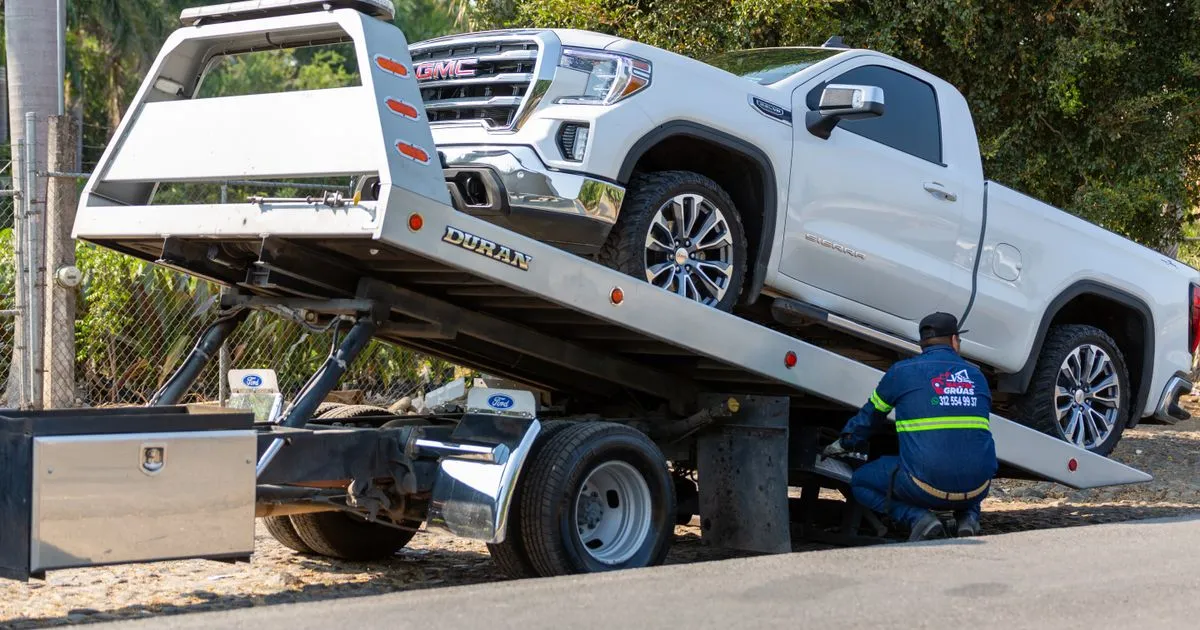
- Seizure. If the loan is under the two-thirds threshold and you haven’t cured the default, a licensed bailiff or recovery agent takes the vehicle — usually from a driveway or street, without confrontation. Your personal belongings inside must be returned to you.
- Notice of sale. After seizure you must receive written notice stating what you owe, your right to redeem or reinstate, and how long you have before the car is sold.
- Sale and accounting. The vehicle is sold, usually at auction. The proceeds (minus reasonable costs) come off your balance, and you receive a statement showing any shortfall or surplus.
Your Rights During the Seizure
Most disputes happen around the tow truck, so it pays to know the boundaries a car repossession Ontario agent must respect:
- No breach of the peace. Recovery agents can take the vehicle from a driveway, street, or open lot, but they cannot threaten you, force a confrontation, or break locks. Entering a locked garage without consent is off-limits.
- Your belongings are yours. Anything personal inside the car must be returned. Ask for an inventory and a pickup time in writing.
- Licensed and identified. Bailiffs in Ontario are licensed; an agent should identify themselves and the lender they act for.
- Proper notice. You’re entitled to the notices the PPSA and Consumer Protection Act require — including the post-seizure statement of what you owe and your redemption rights.
- Don’t physically resist. It turns a civil matter into a police matter and changes nothing about the debt. If you believe a seizure broke the rules, document everything and complain to Ontario’s consumer-protection regulator — improper seizures do get unwound.
How to Stop or Avoid Car Repossession in Ontario
Call your lender early
Contact them before you miss a payment. Many will shift your due date or set up a short catch-up plan rather than start a car repossession Ontario file.
Reinstate or redeem
Ontario borrowers can often stop repossession by bringing the loan current (paying the arrears plus costs) or paying it out in full within the notice window.
Refinance for a lower payment
If the payment is the real problem, refinancing your car loan to a lower rate or longer term can make it affordable again.
Use the two-thirds rule
If you’ve paid 66% or more, remind the lender they need a court order. That alone often forces a negotiated solution.
The through-line of every car repossession Ontario success story is the same: act at the first wobble, not the third. One tight month is a phone call; three silent missed payments is a file at the recovery agency.
Check Your Options — Soft Check Only →
Voluntary Surrender vs. Forced Repossession
If keeping the car is genuinely out of reach, handing back the keys on your own terms — a voluntary surrender — usually beats waiting for the tow truck. You avoid seizure and towing fees (which otherwise get added to your balance), you choose the timing, and you can empty the vehicle properly. On your credit file the two outcomes look similar — both are serious negatives — but the smaller deficiency from lower fees is real money in a car repossession Ontario situation.
Before surrendering, exhaust the cheaper routes first: a catch-up plan, a due-date change, or refinancing to a lower payment. Surrender is the right call only when the budget truly can’t carry any version of the loan.
The Deficiency Balance After a Car Repossession Ontario Sale
The part that surprises people: losing the car doesn’t always end the debt. Ontario is not a “seize-or-sue” province — meaning a lender can seize the vehicle, sell it, and still pursue you for any shortfall (the deficiency).
Say you owe $19,000 and the repossessed vehicle sells at auction for $12,500. After $1,500 in seizure, storage, and sale costs, $11,000 comes off your loan — leaving an $8,000 deficiency the lender may chase. That figure can go to collections or court, and a judgment adds its own credit damage on top of the repossession.
If you’re facing a deficiency after a car repossession Ontario sale: demand the full accounting (you’re entitled to see how the sale price and costs were calculated), negotiate — lenders regularly settle deficiencies for less than face value rather than litigate — and get any settlement in writing before paying a cent. If the whole debt picture is unmanageable, a consumer proposal can fold the deficiency in with everything else; see our guide to car loans after bankruptcy for what financing looks like on the other side.
How Long a Car Repossession Ontario Record Stays on Your Credit
A repossession is a serious negative mark and is typically reported for about six years from the date of default at Equifax and TransUnion, with any related collection or judgment carrying its own clock. The good news is that the practical impact fades much sooner than the entry itself. Scoring models weight recent behaviour heavily, so two years of clean, on-time payments on other accounts — or on a new income-based car loan — can move you from “decline” to “approved at a workable rate” while the old car repossession Ontario entry is still technically visible. The entry is history; the trend is what lenders actually price. You can monitor your file directly with Equifax Canada.

Can You Get a Car Loan Again After a Repossession in Ontario?
Yes. A car repossession Ontario record lowers your credit, but it does not disqualify you from financing. Lenders in the FindAVehicle network approve buyers with past repossessions by focusing on your current income and ability to repay rather than your score alone. Expect a higher rate at first — toward the upper end of the typical 7%–29.99% range — and treat the new loan as a rebuilding tool. A modest vehicle on a short term, paid on time, both solves your transportation problem and adds the positive installment history your file is missing.
See our bad credit car loans page for what to expect, estimate a realistic payment with our car loan calculator, and read the broader vehicle repossession in Canada guide and our car repossession Saskatchewan guide for how rules differ in other provinces.
Get Pre-Approved — Soft Check Only →
A 12-Month Rebuild Plan After Repossession
A car repossession Ontario credit files show is heavy, but it’s not permanent — and the path back is boring on purpose:
- Months 1–2: settle or arrange the deficiency in writing, pull both reports from Equifax and TransUnion, and dispute anything inaccurate about how the repossession was reported.
- Months 2–6: pay every bill on time, keep credit-card balances under 30% of their limits, and avoid new applications. Payment history and utilization are the two strongest levers you control.
- Months 6–12: if you need wheels, an income-based auto loan — modest vehicle, short term, real down payment — solves transport and adds positive installment history. Paid on time, it actively repairs the damage the repossession did.
The goal isn’t a perfect score in a year; it’s a file that’s clearly trending up, which is exactly what income-based lenders look for.

Car Repossession Ontario: At a Glance
Ontario’s repossession timeline at a glance – each stage, your strongest move at that point, and what decides the deadline:
| Stage | Your strongest move | What decides the deadline |
|---|---|---|
| Missed one payment | Call the lender; arrange a catch-up plan or due-date shift | Your contract’s default clause |
| Paid 2/3 or more | Remind the lender they need a court order to seize | Consumer Protection Act, 2002 |
| Default declared | Reinstate (pay arrears + costs) or refinance to a lower payment | Notice period in your agreement |
| Vehicle seized | Request redeem and reinstate amounts in writing; collect belongings | Redemption window in the notice |
| After the sale | Demand the accounting; negotiate any deficiency in writing | Statement of account from the lender |
The single biggest difference in car repossession Ontario outcomes is whether the borrower acts inside the windows or after they close. Every stage above leaves you at least one good move, and the earlier the stage, the cheaper the move.
One last perspective check. A repossession exists because the car secures the loan — it is a business mechanism, not a moral judgment, and Ontario lenders would almost always rather be paid than tow. That means the borrower who communicates early, knows the two-thirds rule, and moves inside the deadlines holds far more cards than it feels like in the moment. Print the table above or save this page, make the calls, and treat the rebuild as a project with a timeline. Handled that way, a car repossession Ontario record becomes a two-year-old footnote on your credit file rather than a life sentence — and a new, affordable car loan paid on time is the surest thing that turns the page.
Frequently Asked Questions
How many payments can I miss before repossession in Ontario?
Default can begin after a single missed payment, depending on your contract, but most lenders try a catch-up plan first. If you’ve paid two-thirds or more of the total owing, the lender generally needs a court order before they can seize the car at all.
What is the two-thirds rule in Ontario?
Under Ontario’s Consumer Protection Act, 2002, if you’ve paid 66% or more of the total amount owing, a lender cannot repossess without first obtaining a court order. It’s the strongest protection in a car repossession Ontario case, so check how much you’ve paid before you do anything else.
Can I get my car back after it’s repossessed in Ontario?
Often yes, within the notice window, by reinstating the loan (paying the arrears and costs) or paying the balance in full. The exact window is set out in the notice of sale you receive after seizure.
Do I still owe money after a car repossession in Ontario?
Possibly. Ontario is not a seize-or-sue province, so if the car sells for less than you owe, the shortfall (deficiency) can remain your responsibility and may go to collections or court. Always request the full accounting and negotiate any deficiency in writing.
Can a lender repossess my car without notice in Ontario?
Ontario’s consumer-protection rules generally require notice, and the two-thirds rule can require a court order before seizure. After any seizure you must receive a written accounting and a chance to redeem or reinstate before the vehicle is sold.
Can I finance another car after a repossession in Ontario?
Yes. The FindAVehicle lender network considers all credit types and approves based on income. A new loan, paid on time, actively rebuilds the credit a repossession damaged.
About the Author
Nyomi Williams — Auto Finance Writer
Nyomi Williams writes about car loans, bad-credit auto financing, and vehicle ownership for Canadians at FindAVehicle. She focuses on honest, plain-language guidance on rates, approval, and what buyers can realistically expect. Read more from Nyomi Williams →
Sources:Consumer Protection Act, 2002 (Ontario) · Personal Property Security Act (Ontario) · Financial Consumer Agency of Canada — Loans · Equifax Canada.
Disclaimer: This guide is general information about car repossession Ontario rules, not legal advice. Consult Ontario’s Consumer Protection office or a licensed advisor for your situation. FindAVehicle is an auto loan-matching service, not a lender, and does not guarantee approval.